Javoryx
Layer Framework
Layer Framework
Couldn't load pickup availability
Self-paced learning overview
- 📥 Digital file available after purchase
- ♾️ Long-term availability
- 🔒 Secure checkout
- 🗓️ Content updated in 2026
1. Problem Statement
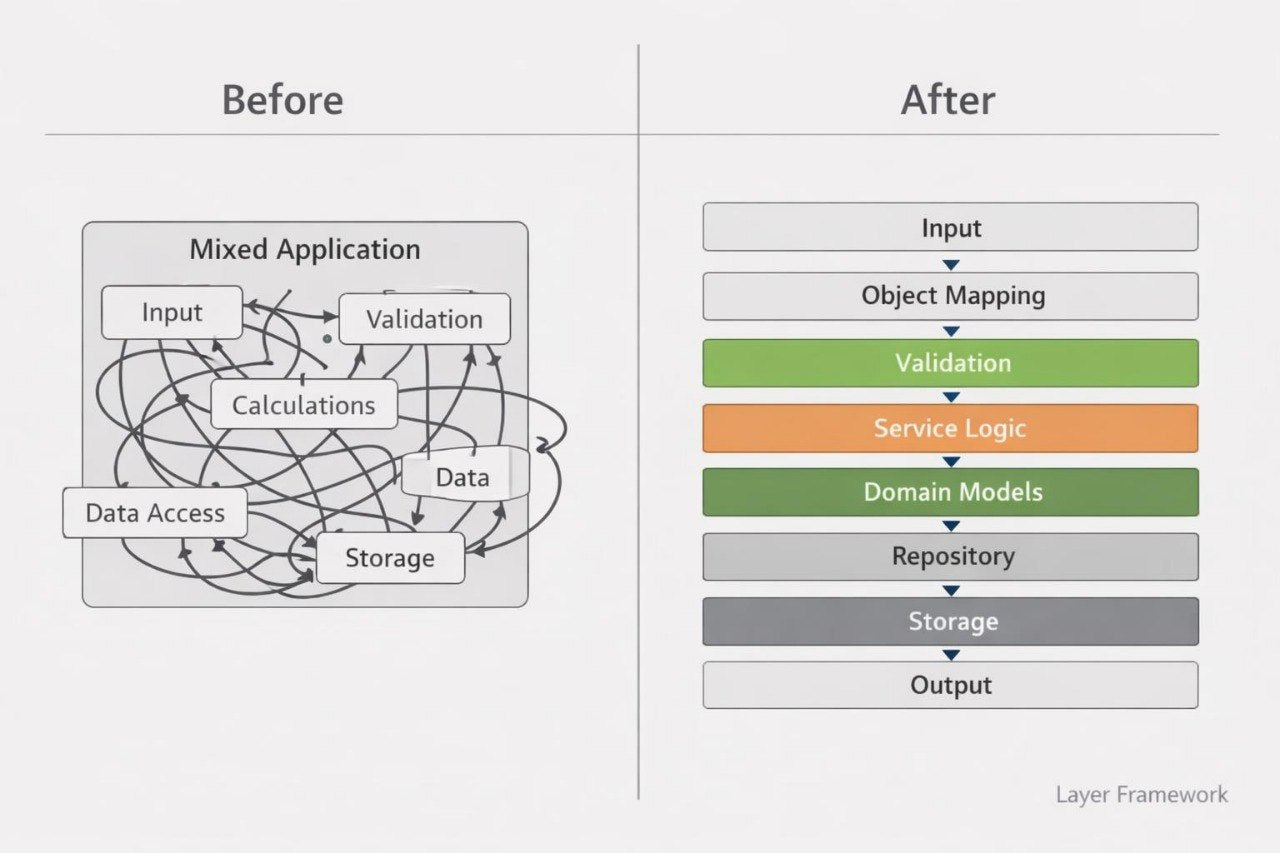
Struggling to decide where data rules, validation, and storage operations should be placed in a Java program? You’re not alone when a program begins to contain many classes and connected processes. One component may receive information, validate it, complete calculations, and store the result at the same time. This structure can cause one change to affect several code areas and make the source of an error harder to identify. Without separate layers, testing individual operations and following the direction of information through the program becomes more difficult.
2. Solution
This course will teach you how to divide a Java program into layers with defined responsibilities. You will create separate components for representing data, applying rules, storing records, and preparing results. The materials demonstrate how information can move between layers without mixing their internal responsibilities. You will also work with value validation, object conversion, and the replacement of a storage component without changing the central processing logic. An applied project brings these layers together within one consistent structure.
3. What’s Inside
Module 1: Understanding Program Layers
Review the purpose of separate layers and decide which operations belong to models, services, repositories, and external interaction components.
Module 2: Domain Models
Create classes that describe central entities, stored state, and rules for changing information.
Module 3: Repository Structure
Add, locate, update, and remove records through a separate storage component.
Module 4: Service Logic
Organize calculations, validation steps, and sequences of connected operations within service classes.
Module 5: Data Validation
Write rules for checking text, numeric, and combined values before they are processed.
Module 6: Object Mapping
Convert information between internal models and objects used for input or result presentation.
Module 7: Layer Testing
Prepare separate scenarios for services and repositories with controlled input values and stated expected results.
Module 8: Layered Java Project
Build a program containing models, a repository, services, validation rules, and result preparation.
4. Who Is This For?
✅ This tier may suit you if you:
- have already created programs with several components;
- want to separate processing logic, data, and storage operations;
- would like to test program parts independently;
- are ready to work with a layered structure.
❌ This tier may not match your needs if you:
- are beginning with introductory Java syntax;
- have not yet worked with classes, collections, and exceptions;
- are looking for materials without an applied project.
5. What You’ll Learn
After completing the materials, you will be able to:
- distribute responsibilities between program layers;
- create models with defined state rules;
- separate storage operations from data processing;
- build service classes for connected processes;
- validate information before using it;
- map information between different object forms;
- replace a repository implementation without editing service logic;
- create at least twelve checking scenarios;
- build a program containing at least four separate layers.
6. Refund Terms
A refund request for Layer Framework may be submitted within 30 calendar days of the order date. Requests are reviewed under the store refund policy published when the course was purchased. The complete policy describes the submission procedure, review period, and possible exceptions.
7. Certificate
Learners may receive a Javoryx certificate after completing all modules and required assignments included in Layer Framework. It confirms completion of the course materials but does not represent a diploma, licence, or occupational qualification.
1. What format are the learning materials provided in?
1. What format are the learning materials provided in?
Each tier contains structured digital materials focused on Java Programming. Depending on the selected option, it may include themed modules, written explanations, code examples, practical tasks, review questions, and supporting resources. The exact contents are listed on the page of each course tier.
2. Do I need previous Java Programming knowledge?
2. Do I need previous Java Programming knowledge?
The recommended background depends on the selected tier. Introductory options cover basic syntax and program logic, while broader tiers explore objects, collections, data handling, and code organization. The suggested knowledge level is stated in every course description.
3. Can I study at my own pace?
3. Can I study at my own pace?
Yes. The materials are organized so learners can plan their own study schedule, return to previous topics, and repeat practical tasks when needed. Following the modules in the listed order is recommended because later topics build on earlier explanations.
4. Are a certificate and refunds included?
4. Are a certificate and refunds included?
A certificate may be provided after the learner completes all required modules and tasks included in the selected tier. Eligible paid tiers may be covered by a 30-day refund policy according to the terms published by the store. Refund terms do not apply to the free tier because no payment is collected.
Share